With the 2026 edition still fresh on my mind, here is a walk down my World Cup memory lane: from a small locality in Mangalore with exactly one color TV to an Alaska Airlines flight over the Pacific, where a few strangers huddled around one person’s spotty Wi-Fi.
1986: The TV That Cricket Bought
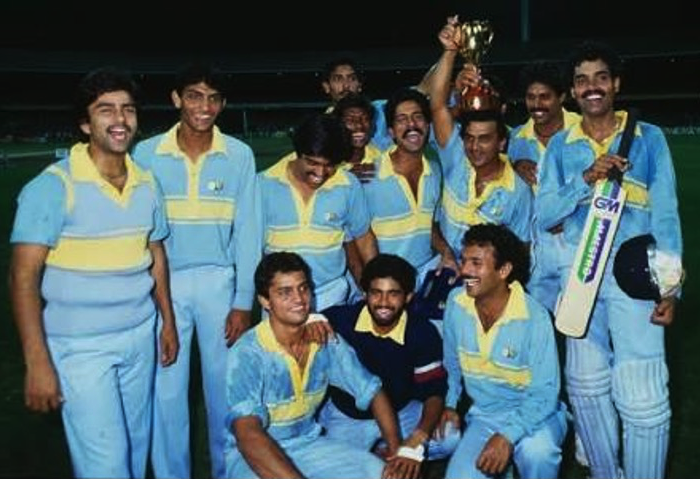
To understand why my family has a soccer World Cup story at all, you have to begin with cricket. In 1985, India won the Benson & Hedges World Championship of Cricket—the “mini World Cup”—and local Mangalore hero Ravi Shastri (while he played for Mumbai, his family originated from namma Kudla, and my father apparently had seen Shastri practice in the nets near Kadri) was named Champion of Champions and won an Audi 80. My dad did not win an Audi 80, but he did watch the whole tournament at the one house in the neighborhood with a color TV.
Channel 9’s coverage of cricketers in colored clothing, he felt, was not meant for black and white.
So when the 1986 World Cup arrived, Dad decided he was done watching Sporting Spectacles from other people’s living rooms; bought a color TV for our house, for the then princely sum of ₹9,000.
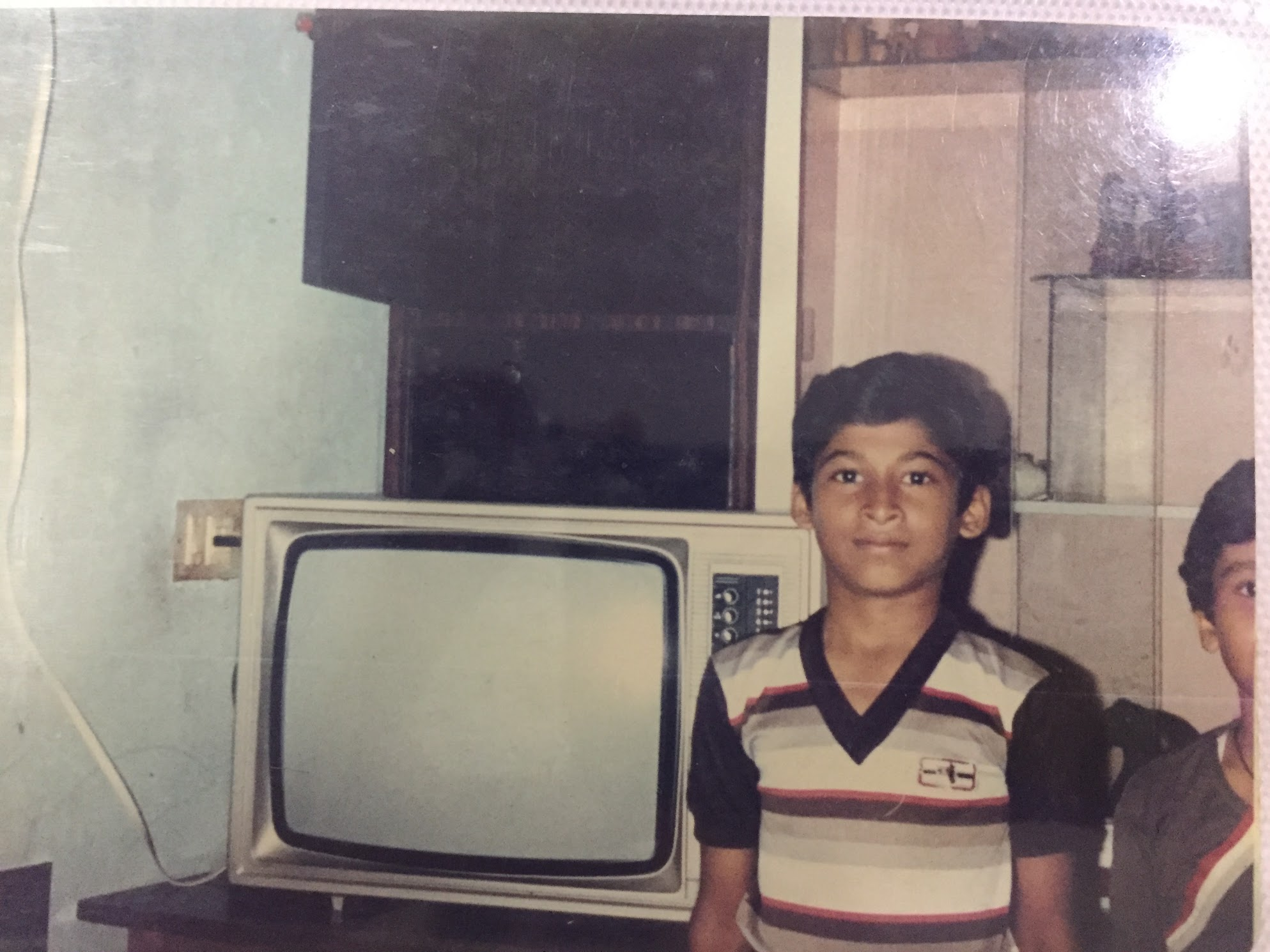
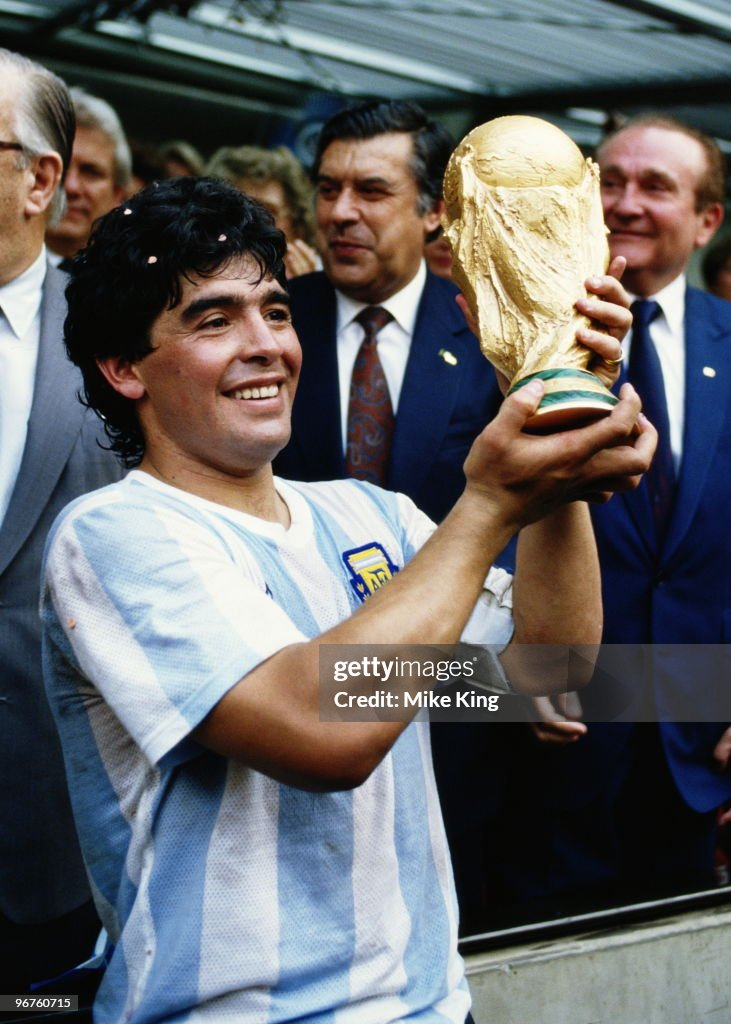
What I remember is Maradona lifting the trophy for Argentina, and my dad looking at me—a short, curly-haired kid with a suspiciously square face—and declaring that I looked just like him. In hindsight, I'm fairly certain this was less an objective scouting report and more an example of the Kannada proverb "hettavarige heggana muddu" — to a parent, even a bandicoot looks adorable, which I'll take the liberty of paraphrasing as: to a parent, every child looks like their favorite sportsman. And just like that, "Argentina fan" was implanted into my identity before I even knew what a corner kick was. I had not chosen a team. The team was thrust on me!
1990: The Upset, the Comeback, and a Nap That Cost Me a Final
By 1990, I was old enough to follow along, though “follow along” mostly meant tracking my supposed doppelganger and whichever team he played for.
Argentina, the defending champions, opened by losing 0–1 to Cameroon and Roger Milla—a result still invoked whenever soccer needs to remind us it respects no reputation. Somehow, against all logic, Argentina clawed its way back to the final. I fully intended to watch it. I really did. Instead, I fell asleep—and woke up to secondhand heartbreak delivered by my uncles (I was visiting relatives). Argentina had lost. I mourned appropriately, despite having witnessed none of it.
1994: A Defection, a Rivalry, and Rising Tempers at Home
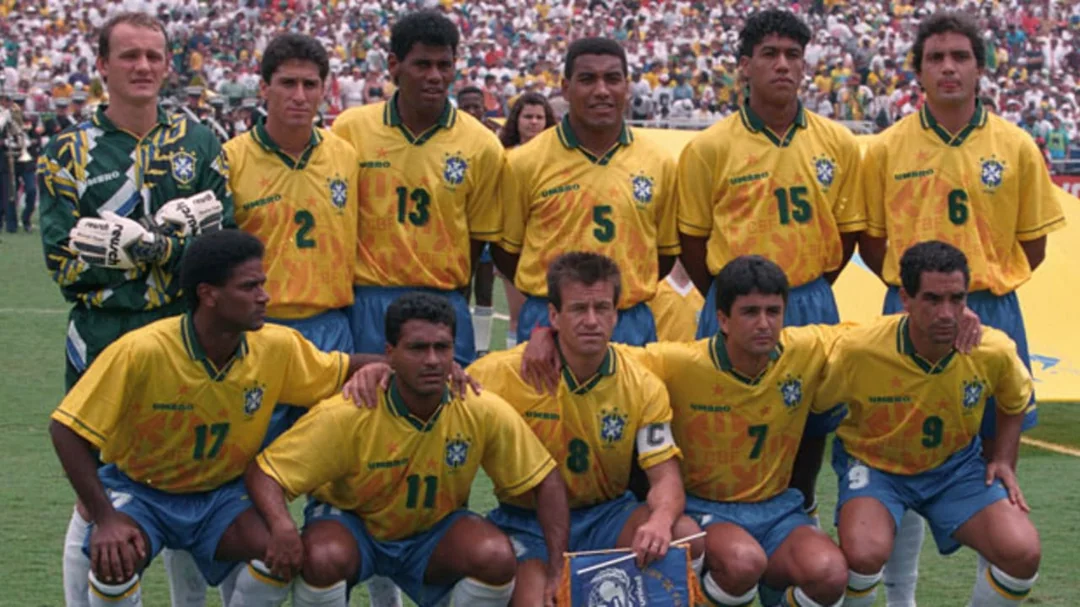
This is where things get interesting. A classmate confidently told me Brazil were the favorites. I did some light research (asked a few more people, read the latest “Sports Star” in the library, etc.) and confirmed he was not wrong. Pelé himself was praising a kid named Romario as the next big thing. I was too young to have a sporting loyalty of my own, especially with my own country absent. If Brazil were the favorites, then obviously I should support Brazil. It seemed perfectly logical at the time. So I adopted Brazil: Romario, Dunga, Bebeto, and company.
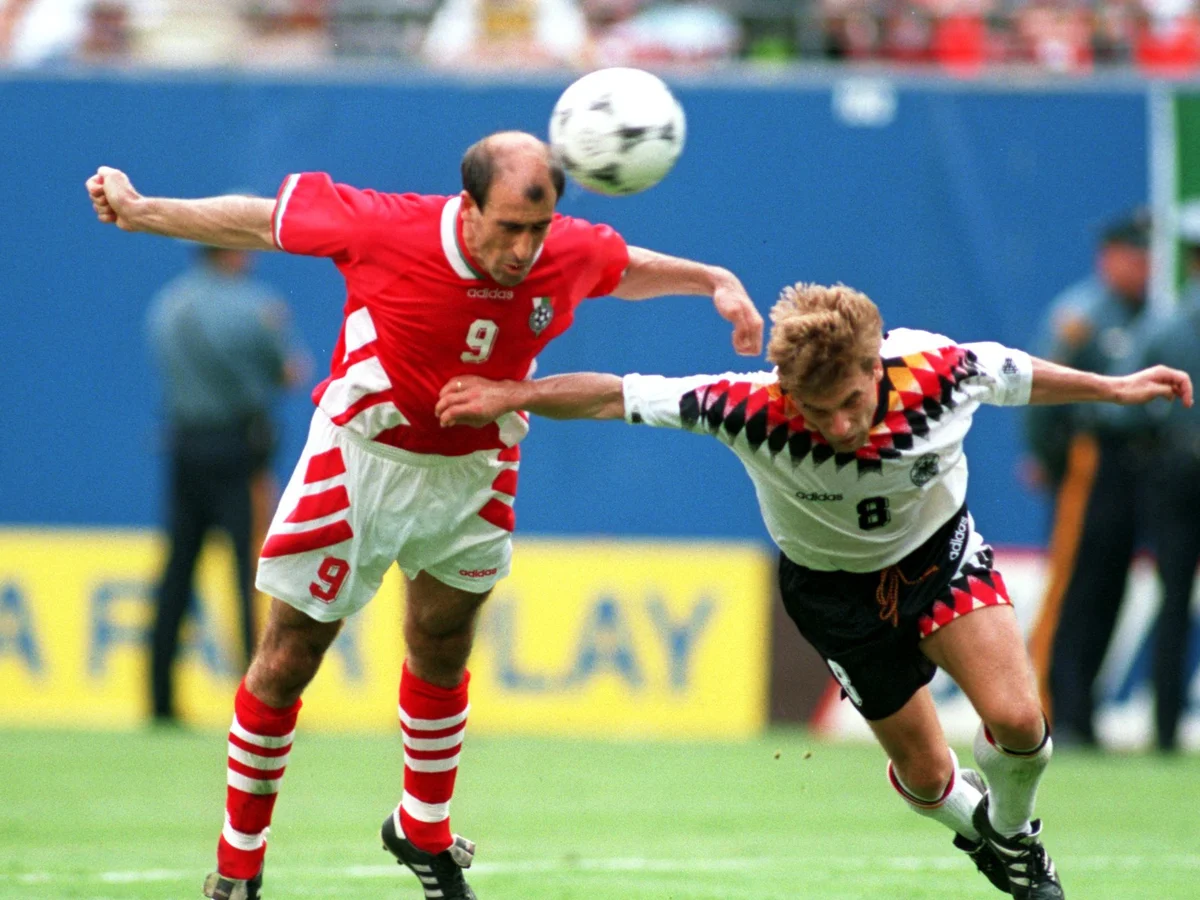
There was also the small matter of Bulgaria. Stoichkov and Lechkov stunned the defending champions Germany in the quarterfinals, knocking them out cold, and I will admit to feeling a deeply satisfying, entirely unearned sense of justice about it — Germany had broken my little napping heart four years earlier, so as far as I was concerned, this was the universe settling old accounts on my behalf. There's also a joke that made the rounds after that game — a German player, stretchered off after Matthäus put them 1–0 up, wakes up in the locker room fully confident his team is through, and asks for the final score. "2–1," someone tells him. "Who scored the other goal?" he asks. The names Stoichkov and Lechkov come back, and he promptly faints again. I have no idea if it's true!
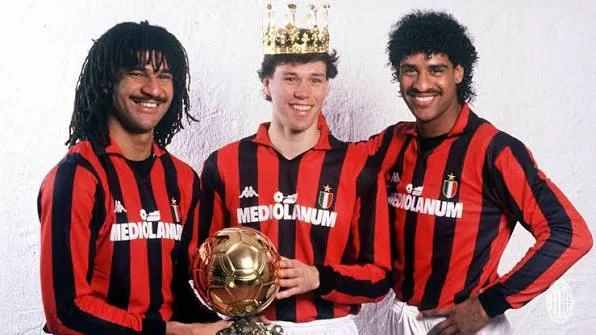
My older brother, meanwhile, bled orange for the Netherlands—Gullit, Rijkaard, Van Basten, the whole Dutch aristocracy. He insisted, with real conviction, that poor officiating had doomed the Dutch in their quarterfinal against Brazil: the match was tied 2–2 when Branco scored from nowhere on a free kick, and my brother has argued for three decades that two of Brazil’s three goals should have been called offside. It is probably more coincidence than conspiracy that he often rooted for whoever my team was playing, though as the older brother he would likely claim it was the other way around :). Credit where due: he was also the first to educate me on club football, back when I had no idea AC Milan existed, let alone that it ran on the same Dutch trio—or that Napoli was led by a diminutive Argentine of some renown. The rivalry extended beyond soccer. In tennis, I was Team Lendl mostly because he was ranked No. 1, while my brother was firmly Team Becker, a split that may have had more to do with our dad’s preferences than anything either of us reasoned out independently. Every oldest son, in the end, follows his own heart. Baggio had always been his second favorite, behind the Orange trio, which made his heartbreak all the more understandable when Baggio skied that penalty in the final. Brazil eventually beat Italy on penalties—a result my brother took a couple of days to come to terms with.
1998: Ronaldo, Rivaldo, Roberto Carlos, and One Frenchman Who Ruined Everything
Four years later, Brazil looked unstoppable: Ronaldo, Rivaldo, Roberto Carlos. On paper, no team on Earth had any business beating them. Then they met Zinedine Zidane, who apparently had not read the paper.
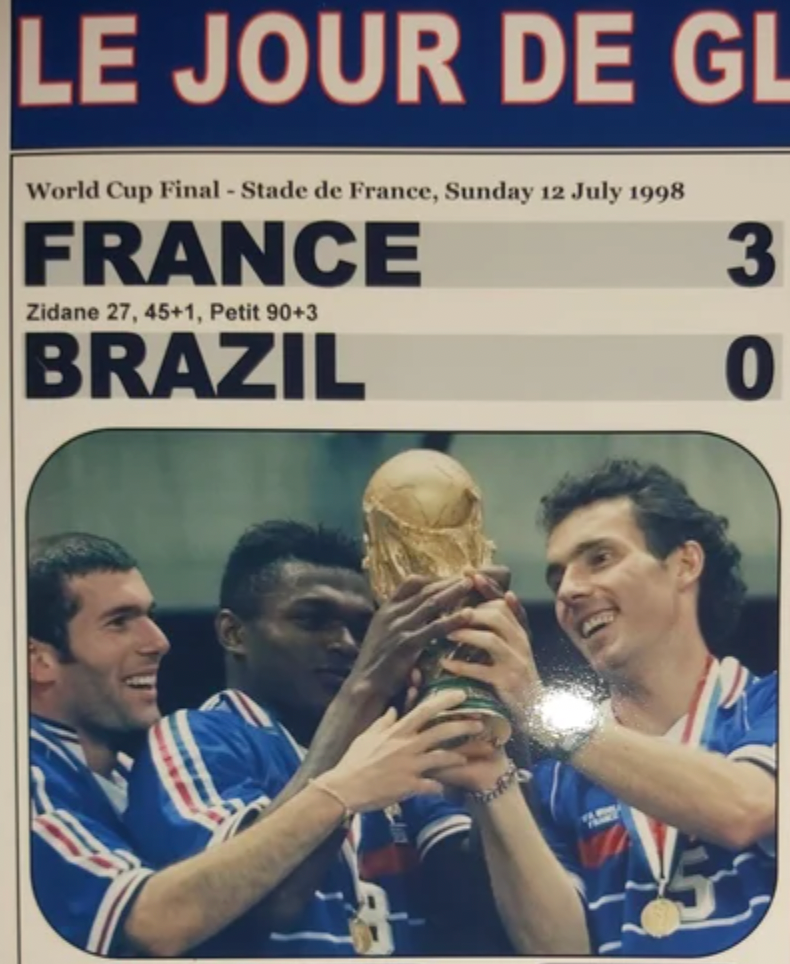
I was so nervous before the final that I avoided watching it altogether and waited for the morning newspaper like some pre-broadband monk. When the headline finally arrived, it was brutal: Brazil 0, France 3. I was devastated by a scoreline I had not even watched happen!
2002: The Blackout Final and a Redemption
2002 was supposed to be my redemption arc as a viewer—the year I would again watch the final live. Naturally, the power went out. This was small-town India before home generators were common, so a power cut meant a total blackout: no TV, no cable, no internet, nothing.
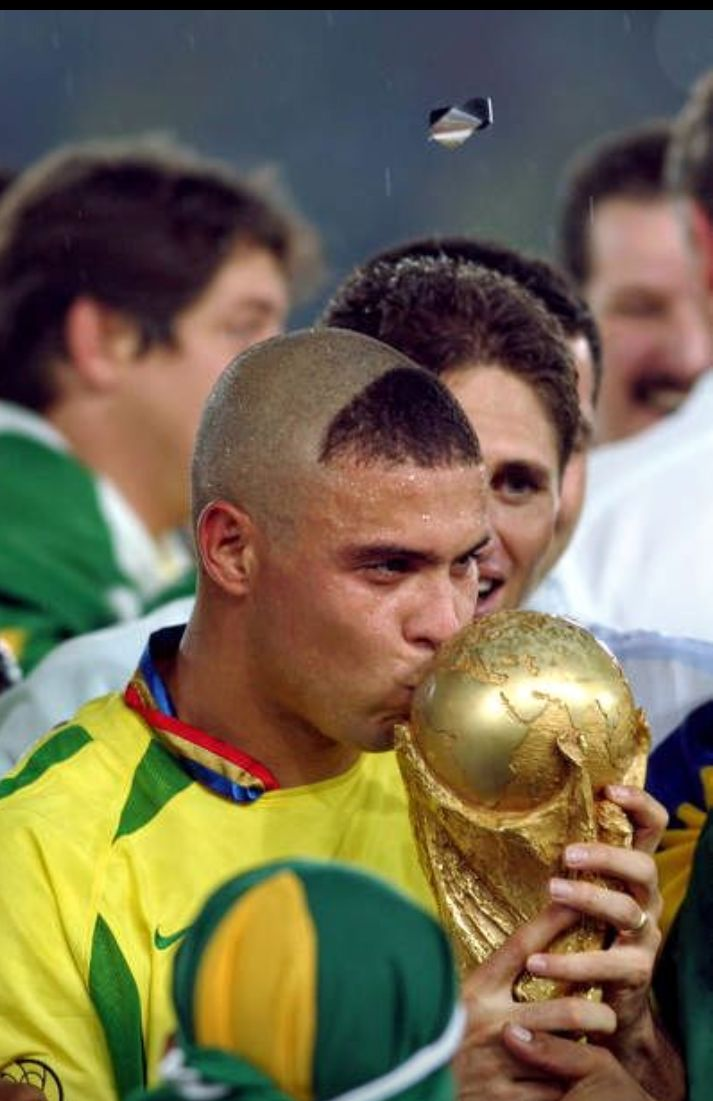
My dad, ever the planner, had arranged to watch the final on a big screen at a paid event in a fancy restaurant, leaving me at home to pace and curse my helplessness. When he returned, he brought the news: Brazil 2, Germany 0, and Ronaldo redeemed himself for the 1998 miss, with two goals. I had not seen a minute of it, but I accepted the relief, however it came.
2006: Boise, and a Very Specific Kind of Schadenfreude
By 2006, I was in Boise, thousands of miles from the banter, family arguments, and general chaos that made World Cups feel like World Cups. Without my dad and brothers in the mix, the tournament did not land the same way, so I mostly tuned out—except for one very specific grudge.
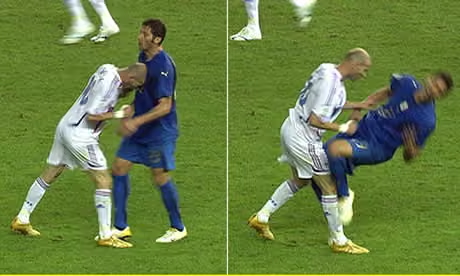
I wanted France to lose. More precisely, I wanted Zidane to lose, as payback for what he had done to Brazil eight years earlier. Looking back, it was admittedly petty, but teenage grudges have a long shelf life.
Did the universe deliver? Yes: Zidane was sent off in the final for a head-butt that will outlive us all, and Italy won the title. I will not lie—I felt a flicker of satisfaction. But it faded quickly once the context emerged: Materazzi had reportedly provoked Zidane by going after his family, and that is a line I do not think sport should ever cross. Insult a man’s game all you want. Leave his family out of it. For me, it remains one of the saddest endings to a great career.
2010: Michigan, Between Two Lives
In 2010, I was in Michigan, newly out of grad school and enjoying a bit of time off before rejoining the workforce. Again, there was no banter, no household chaos, no uncles delivering bad news the next morning. The tournament passed in the background, a footnote wedged between one chapter of life and the next.
I did, at least, root for the Netherlands in the final—my brother's team, finally within reach of the trophy that had eluded them for so long. It wasn't to be; Spain beat them in the final. By then my brother had gone thoroughly cynical about the whole thing anyway. He said no amount of future World Cups could ever make up for Gullit, Rijkaard, and Van Basten not winning one back in the '90s—as far as he was concerned, that was the version of the Dutch that deserved it, and the debt was never really repaid.
2014: Messi, My Boss, and the Best Kind of Office Bonding
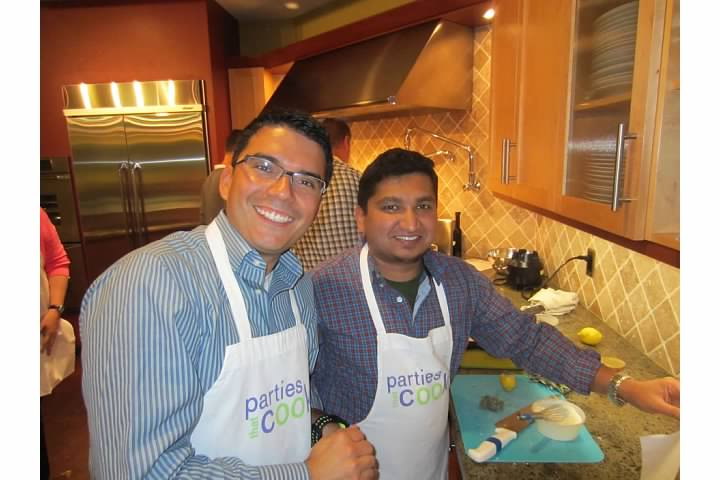
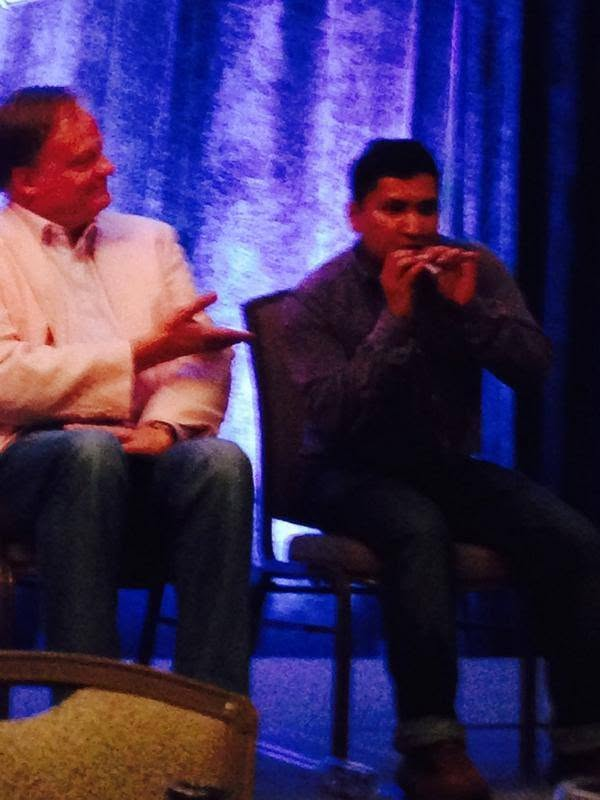
2014 was the first time since 2002 that I was truly locked in, for two reasons. First, my then boss, Luis, was a hardcore Argentina fan, and his boss, Jim, was one of those rare leaders who understood global markets and global culture/sports in equal measure—the kind of person who could read a room in Buenos Aires as easily as one in the Bay Area. Bonding with both of them over the tournament, including watching games in an office conference room, remains one of my favorite work memories that had nothing to do with work. It is funny how much easier work conversations become when everyone is emotionally invested in something completely unrelated. We even ended up at an industry conference in San Antonio during the tournament, which meant more socializing, more football, and a room full of grown professionals losing their minds when Clint Dempsey scored against Ghana less than 30 seconds into the game to help USA win that game.
Second: Messi was at his absolute peak, and as a lifelong Latin American football sympathizer, I was fully invested.
And then, true to form, it all fell apart. Brazil’s 7–1 collapse against Germany in the semifinal was so unbelievable and humiliating that I stopped watching after twenty minutes—a level of secondhand embarrassment usually reserved for watching someone bomb a speech on stage. Argentina then lost the final 0–1 to Germany, and I remember thinking with real certainty that this was it for Messi.
Turns out I was wrong. Wonderfully, spectacularly wrong.
2018: Outvoted by Family Elders
In 2018, I was visiting family in India, surrounded by gatherings, home-cooked food, and relatives I do not see nearly often enough. I caught a game here and there, but “tuned in” would be generous. Every time I tried to sneak away for a key match, some elder would appear with a version of, “What are you watching? Come talk to us. You are barely here.”
I lost that argument every time—and, in hindsight, rightly so.
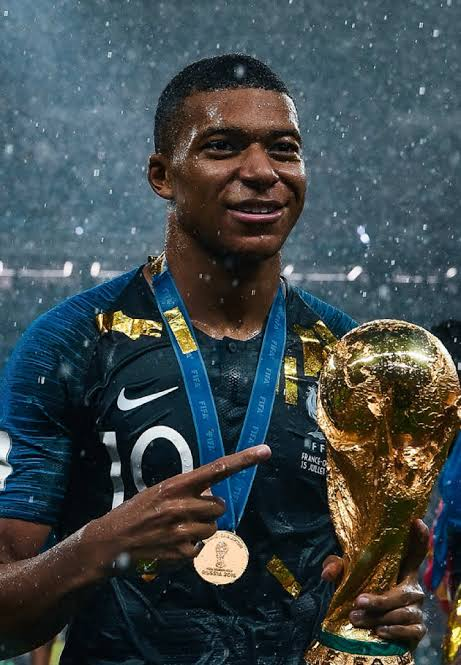
The one thing that did cut through, even amid another LATAM letdown, was a teenager named Mbappé bursting onto the scene with the kind of debut performance that makes you sit up regardless of which elder is currently talking over the TV.
2022: Redemption, Somewhere Over the Pacific
Then came 2022—the one that stays with me, oddly enough, not because of anything I watched on a screen. My family and I were on a flight to Kauai, and exactly one passenger near our row had spotty internet during the final.
Word spread quickly, and soon a small crowd of strangers gathered around that seat, tracking the score on someone else’s phone. Every penalty kick set off cheers from one faction or another, depending on whether they were Team Argentina or Team France.
When Argentina finally won, the plane practically erupted. It felt as if most of the cabin had been on the same side all along, cheering for Messi to win the one prize that had eluded him since 2006.
The moment we checked into our hotel, I fired off an email to Luis, my old Argentina-supporting boss from 2014: “He did it.” I imagine it carried something close to the satisfaction a certain POTUS might’ve felt calling his predecessor to deliver news of a completely different, equally long-awaited redemption.


A final thought
So that is four decades of World Cups: blackouts, borrowed TVs, a brother seemingly destined to occupy the opposite side of the room, a boss who could read Buenos Aires and Wall Street with equal fluency, and a plane full of strangers united by one man’s penalty kick.
The teams have changed, the players have changed, and I have apparently changed loyalties more often than I would like to admit.
Maybe that's the real tradition. Not supporting Brazil or Argentina. Not winning or losing. Just finding myself, every four years, emotionally invested and going down memory lane, all over again.